
Graduate strong professionals
Measure and develop the professional skills employers and communities expect, like teamwork, ethics, critical thinking, communication, collaboration, professionalism, and resilience, through a validated, story-based situational judgment test built for higher education programs.

Key Benefits

Go beyond grades
Professional Skills Development provides structured, reliable evidence of learners’ professional skills, surfacing strengths and gaps early so conversations about performance are more meaningful and proactive.

Graduate truly career-ready learners
Help learners build and demonstrate the durable, non-technical skills that matter most in the workplace through realistic, scenario-based assessments with actionable feedback and resources.

Make development manageable and trackable
Replace fragmented reflections and surveys with a scalable, accreditation-aligned assessment that delivers defensible evidence of learner development, without new tools or added admin.

How Professional Skills Development Works
A structured way to develop professional skills — within your existing curriculum.
Track growth beyond grades
Learners complete the assessment by responding to real-world scenarios, revealing how they think, communicate, and respond in their own words. Programs can track individual and cohort progress over time.
Focus support where it matters
Reports highlight individual and class-wide strengths and areas for improvement to support data-informed, timely, and specific advising. Early indicators help identify learners who may benefit from additional support.
Empower learners to grow
Each participant receives a personalized feedback report and curated skill-building learning resources, turning the assessment itself into a learning experience.
Key Features of Professional Skills Development
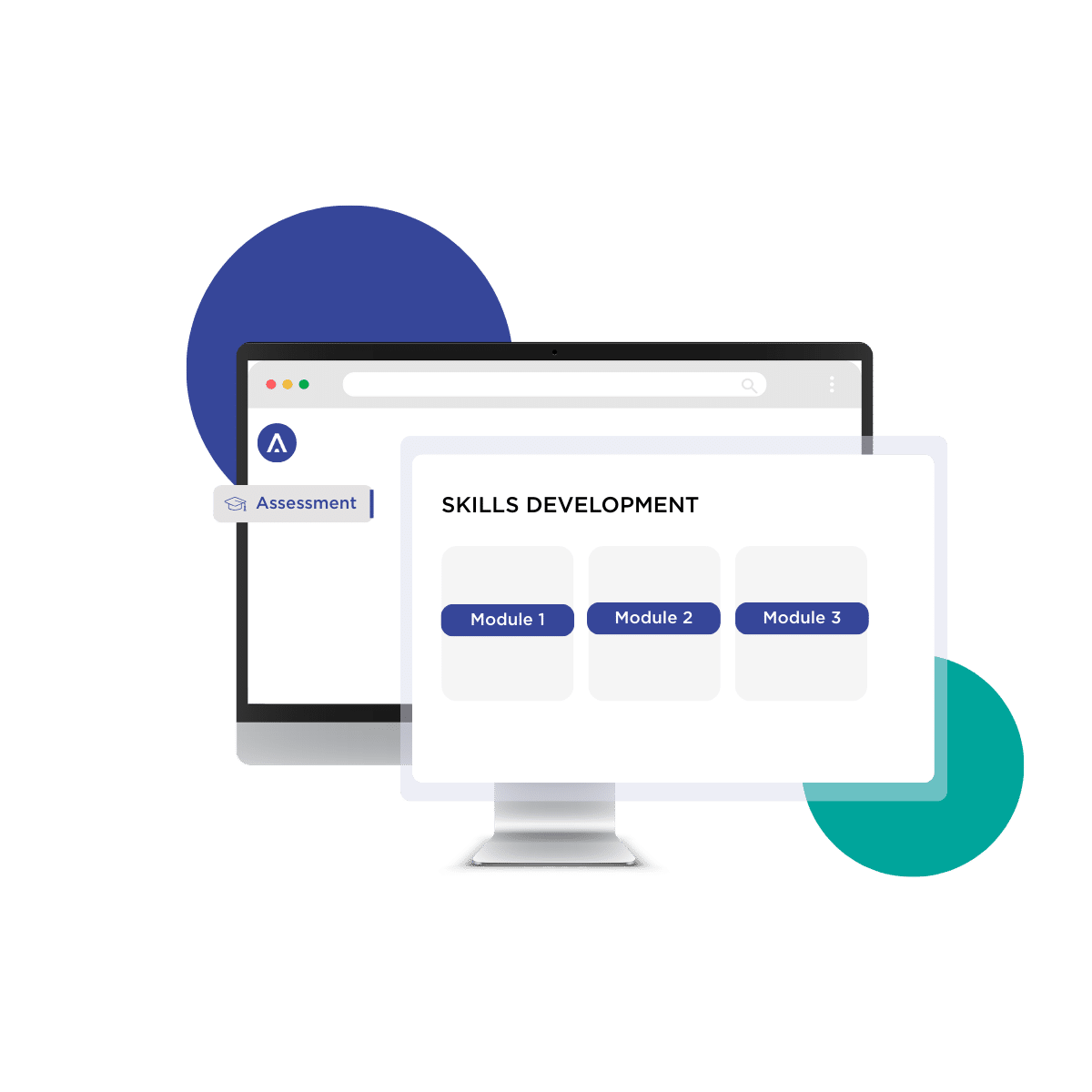
Story-based, modular assessment
In this situational judgment test, learners respond to realistic scenarios that measure key competencies like teamwork, ethics, critical thinking, communication, collaboration, professionalism, and resilience.
Flexible assessment experience
Modules can be completed in one sitting or across multiple sessions, in class or independently, making it easy to integrate into existing courses or advising programs.
Actionable reporting
Programs receive aggregated results across four key domains grounded in a competency framework built from 96 competencies across 10 recognized professional standards. The result is analyzable, longitudinal data that supports outcomes assessment, continuous improvement, and accreditation reporting across disciplines.
Personalized learner feedback
Learners receive their own reports with tailored insights and recommended activities to strengthen their professional skills.
What Makes It Different
Purpose-built for higher education
Developed specifically for academic programs, not adapted from corporate tools or personality tests, this solution measures skills that can be taught, practiced, and improved.
Bridges admissions to outcomes
Built by the same team behind Casper, Video Interviews, and One45, it extends Acuity’s experience in curriculum and mission to help programs understand and develop the whole learner for career-readiness, from admissions through graduation.
Validated by research
Early studies show excellent reliability and sensitivity to learner development, confirming its value as a meaningful measure of skill growth.
Low-lift implementation
No new tool design required. Programs simply choose when to administer, and Acuity provides everything — from set-up to scoring to reporting.
Frequently Asked Questions
- What is Professional Skills Development?
A validated, story-based assessment that measures and develops learners’ professional skills while they’re in your program. It helps institutions evaluate non-technical competencies like communication, resilience, and ethics, and provides resources for continued growth.
- How is it different from Casper?
While both tools measure non-technical, durable skills, they’re designed for different stages of the learner journey. Casper is used during admissions to help programs identify applicants with strong non-technical attributes, providing a snapshot of potential before learners enter your program. Professional Skills Development, on the other hand, is taken during the program to measure and build those same skills over time. It’s a formative, repeatable experience that tracks growth, supports advising, and gives learners personalized feedback and resources to strengthen their professional competencies.
- How often is it administered?
Programs typically run two sittings per year, but frequency and timing are flexible. Learners can complete modules in one sitting or across multiple sessions.
- What do learners and programs receive?
Learners receive individual, personalized feedback and development learning resources. Programs receive cohort-level reports highlighting key strengths and opportunities for improvement.
- Is it an assessment or a teaching tool?
Both. It’s designed as a formative experience, providing actionable feedback for learners and evidence for programs to guide advising, early intervention, and continuous improvement.
Graduate strong professionals.
Track growth beyond grades, support the whole learner, and help every graduate enter the workforce ready to thrive.